
Overview
PCBN inserts are cutting inserts made with polycrystalline cubic boron nitride. In practical machining, they are mainly used for hardened steel, cast iron and other applications where heat resistance, edge stability and tool life are important.
For buyers, PCBN is not simply a “harder insert.” It is an application-based cutting tool material. The right PCBN insert depends on workpiece material, hardness, cutting condition, surface finish requirement and current tool life target.
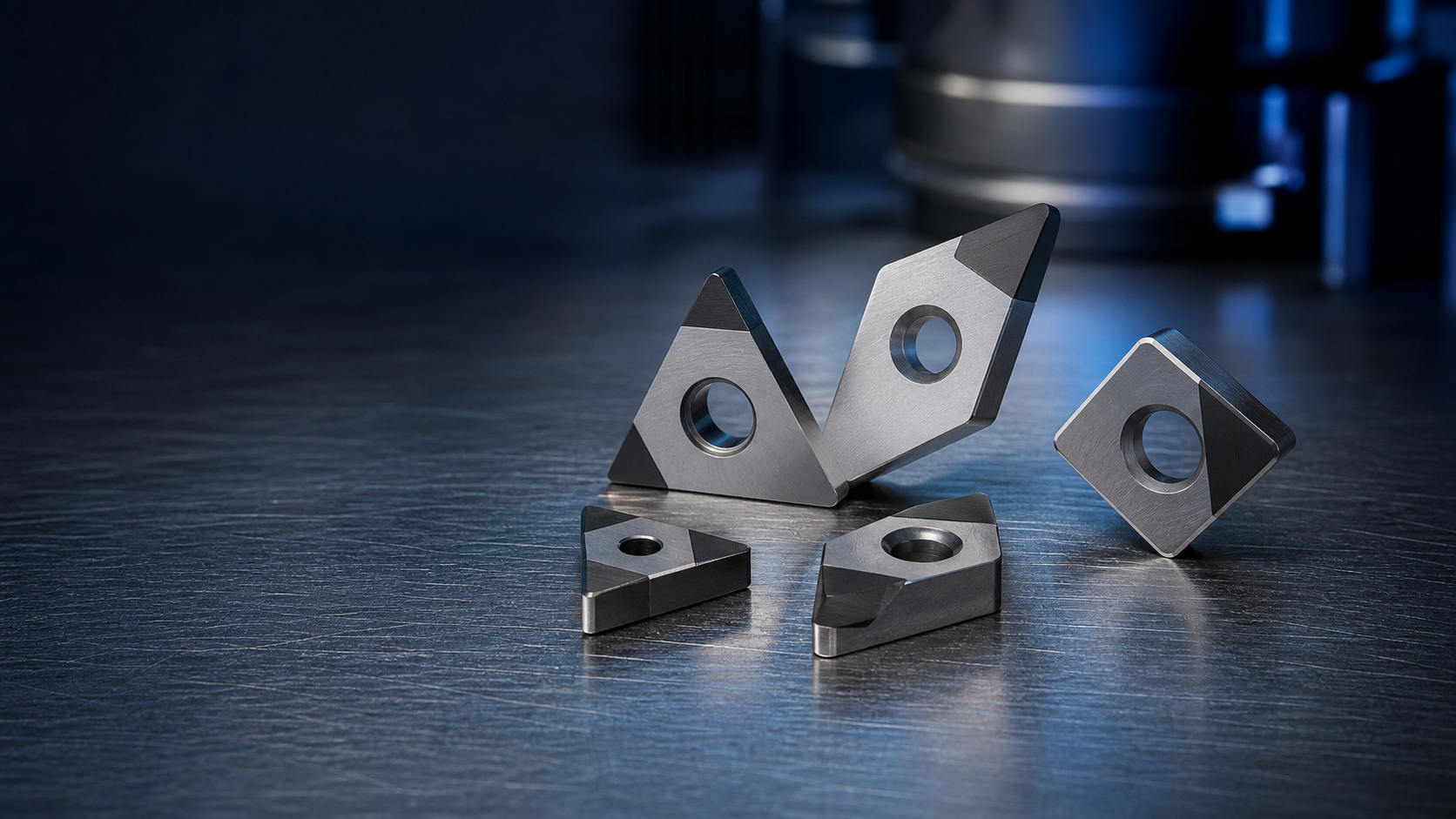
Main applications of PCBN inserts
PCBN inserts are commonly used in hard turning, finishing and demanding production machining. Typical applications include:
- Hardened steel components: used for hard turning and finishing when conventional carbide inserts wear too quickly.
- Cast iron parts: suitable for abrasive cast iron machining where stable edge performance and repeat tool life are important.
- Brake discs and brake drums: common in automotive production where surface finish, consistency and cost per part matter.
- Bearing rings and bearing components: often used when high hardness and stable dimensional control are required.
- Gears, shafts and transmission parts: useful for hardened components that need consistent finishing after heat treatment.
- Powder metallurgy parts: suitable for abrasive workpieces when insert wear needs to be controlled.
- Interrupted or semi-interrupted cutting: possible when the PCBN grade and edge preparation are selected for the real cutting condition.
The most common buyer question is whether PCBN can replace carbide or ceramic inserts. The answer depends on the material and cutting condition. In many hardened steel and cast iron applications, PCBN can provide better tool life and more stable cutting performance, but it must be selected correctly.
PCBN for hardened steel
PCBN inserts are widely used for hardened steel machining, especially when the workpiece hardness is high and conventional carbide tools wear too quickly.
Typical hardened steel applications include:
- Bearing steel: common in bearing rings, races and related precision components.
- Tool steel: used when hard turning or finishing is required after heat treatment.
- Hardened gears: suitable for finishing operations where dimensional consistency matters.
- Hardened shafts: used when stable surface finish and tool life are required.
- Precision turned components: suitable for repeat production where tolerance and surface quality are important.
For hard turning, buyers should pay attention to hardness, cutting depth, surface finish requirement and whether the cut is continuous or interrupted. These details directly affect PCBN grade selection and edge preparation.
PCBN for cast iron and brake disc machining
PCBN is also used for cast iron machining, including brake discs, brake drums and other automotive parts. Cast iron can be abrasive, and stable edge performance is important for repeat production.
In brake disc machining, buyers usually care about:
- Stable tool life: helps reduce frequent insert changes during repeat production.
- Surface finish: important for brake disc quality and customer acceptance.
- Dimensional consistency: helps keep the machined part within tolerance over longer production runs.
- Productivity: affects cycle time, machine utilization and delivery speed.
- Insert cost per part: a more useful measure than comparing insert unit price only.
For these applications, quotation should not only compare insert price. A more useful comparison is total machining cost, including tool life, tool change time and scrap risk.
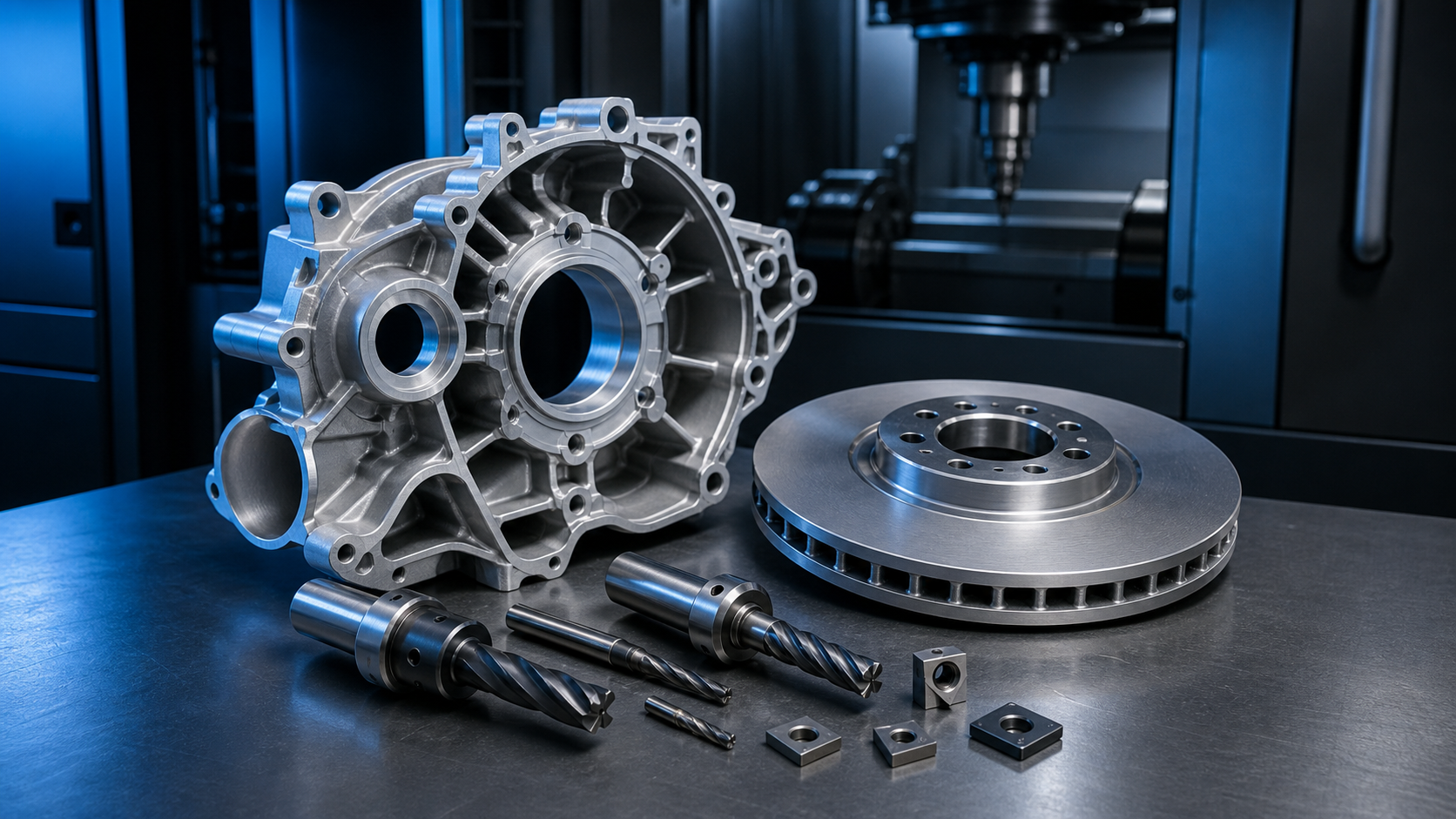
PCBN vs carbide inserts
Carbide inserts are widely used for general CNC machining, including steel, stainless steel, cast iron and common alloys. PCBN inserts are more specialized.
In simple buyer language:
- Carbide inserts: suitable for general CNC machining and broad material coverage.
- PCBN inserts: better considered for hardened steel, cast iron and demanding high-temperature cutting conditions.
- Buyer note: PCBN should not be treated as a general replacement for every carbide insert.
PCBN usually has a higher unit price than carbide, but in the right application it may reduce tool changes and improve consistency.
PCBN vs ceramic inserts
Ceramic inserts are also used in some high-speed machining applications. However, PCBN can offer different advantages in edge stability, toughness and hard turning performance depending on the grade and structure.
The choice between PCBN and ceramic inserts should be reviewed according to:
- Workpiece material: hardened steel, cast iron and other materials require different insert directions.
- Hardness: HRC value or material hardness helps decide whether PCBN is suitable.
- Cutting speed: high-speed finishing and hard turning conditions should be reviewed carefully.
- Interrupted cutting level: heavy interruption may require stronger edge preparation.
- Surface finish requirement: finish target affects nose radius, edge condition and cutting parameters.
- Machine rigidity: stable machines usually give better PCBN performance.
- Coolant condition: dry cutting, wet cutting or mixed conditions should be confirmed before recommendation.
There is no single best insert material for every application. The correct selection should match the real machining condition.
Key selection factors
Before choosing PCBN inserts, buyers should confirm several details.
- Workpiece material: hardened steel, cast iron, powder metallurgy and other materials require different grade direction.
- Hardness: for hardened steel, hardness information such as HRC value is very important.
- Cutting condition: continuous cutting, light interruption and heavy interrupted cutting may require different edge preparation.
- Operation type: turning, boring, grooving and finishing operations should be reviewed separately.
- Surface finish: if the customer needs a specific surface finish, the insert nose radius, edge condition and cutting parameters matter.
- Current problem: tool wear, chipping, poor surface finish or short tool life should be clearly explained.
Standard PCBN inserts and custom PCBN inserts
Some buyers need standard ISO-style PCBN inserts. These are suitable when the insert model is already clear and the application is common.
Other buyers need custom PCBN inserts. Custom inserts may be needed for:
- Special insert shape: used when a standard ISO insert does not match the holder or workpiece feature.
- Special edge preparation: useful when chipping, heavy interruption or finish problems need to be improved.
- Replacement of existing tools: suitable when buyers need an alternative to a current insert or tool design.
- Special boring or grooving applications: often require drawing-based review before quotation.
- Drawing-based machining requirements: helpful for custom geometry, tolerance and repeat supply planning.
For custom PCBN inserts, drawings, sample photos and current tool information are very helpful.
Buyer checklist before quotation
To get a more accurate quotation, prepare the following information:
- Insert model or drawing: the fastest way to confirm size, shape and basic specification.
- Workpiece material: helps confirm whether PCBN is suitable for the application.
- Hardness: especially important for hardened steel applications.
- Operation type: turning, boring, grooving and finishing may need different insert choices.
- Cutting condition: continuous, interrupted or semi-interrupted cutting affects edge preparation.
- Surface finish or tolerance requirement: helps review nose radius, edge condition and cutting parameters.
- Current tool life: useful for comparing the real machining value, not only unit price.
- Current tool problem: wear, chipping, poor finish or unstable life should be clearly explained.
- Quantity and annual demand: helps plan quotation, production and repeat supply.
- Photos of current insert or machined part: useful when drawings are not available yet.
If not all information is ready, buyers can still send the information they already have. A practical supplier can help confirm missing points step by step.
Sereno sourcing support
Sereno Cutting Tools supports buyers who need standard PCBN inserts, custom PCBN inserts and related PCD/PCBN non-standard tools. For distributors, machine shops and OEM buyers, we focus on clear communication, application-based review and practical quotation support.
If you are sourcing PCBN inserts for hardened steel, cast iron or brake disc machining, send your insert model, drawing, material, hardness and quantity. We will review your request and reply with a practical quotation path.
Buyer takeaway
PCBN inserts are best understood by application. They are mainly used for hardened steel, cast iron, brake discs, bearing components and other demanding machining conditions where heat resistance and edge stability matter.
For buyers, the most important step is not only asking for a price. It is providing enough application information so the supplier can recommend the right PCBN insert structure, grade direction and edge preparation.