
Overview
Composite materials such as CFRP, GFRP and fiber-reinforced laminates are widely used in aerospace, automotive, medical, electronics and high-performance industrial parts. These materials are different from aluminum, steel or cast iron. They are often abrasive, layered and sensitive to edge damage.
For buyers, the key question is not only “which drill size do I need?” A more useful question is whether the tool geometry, edge preparation, coating or PCD design can control hole quality, delamination, burr, fiber pull-out and tool life in the actual production condition.
PCD drills and composite cutting tools are often considered when carbide tools wear quickly, hole quality becomes unstable, or repeat production needs better control. However, the right choice depends on the material structure, stack condition, machine setup and quality target.
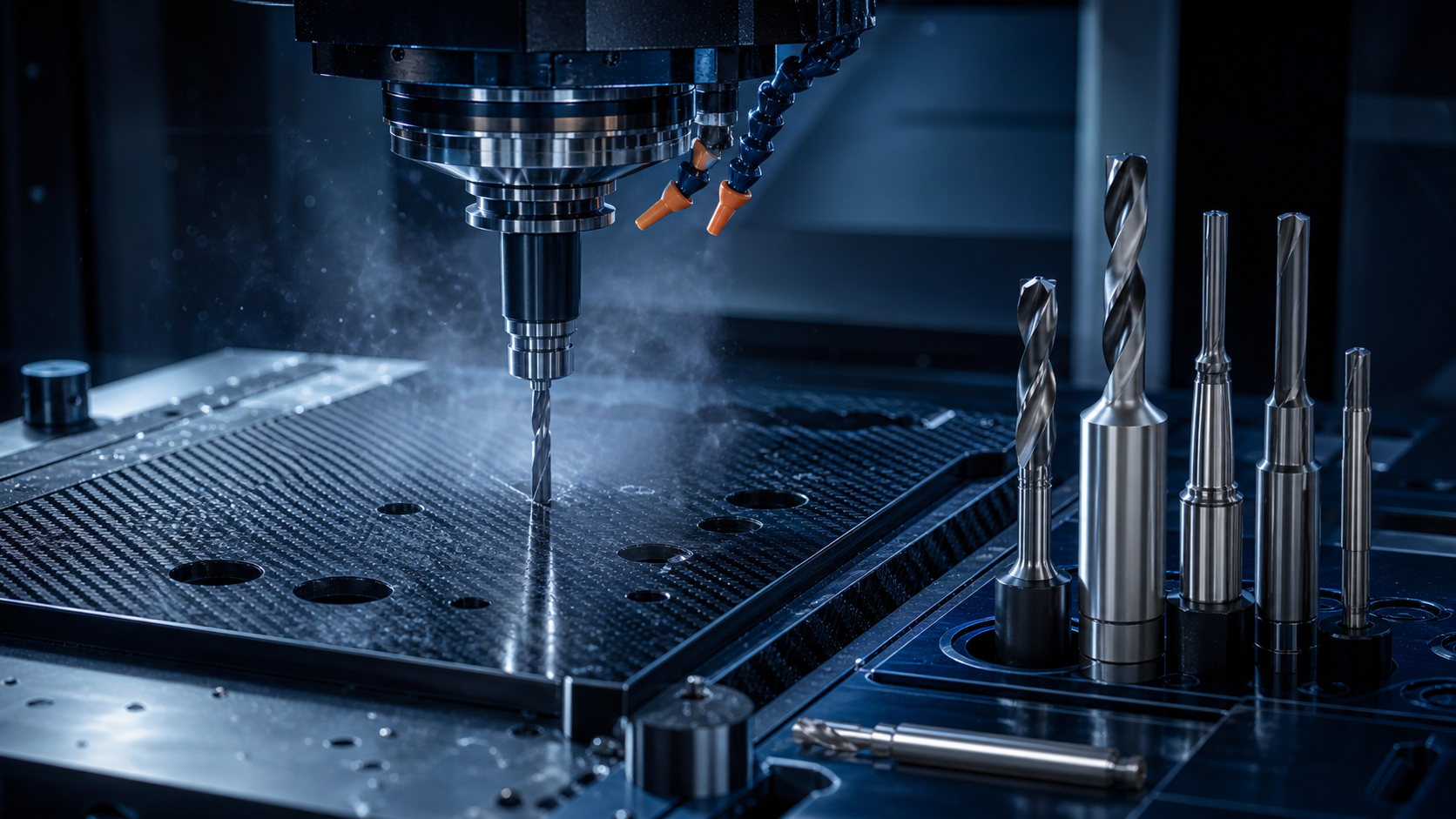
Why composite materials are difficult to machine
Composite materials are not uniform like many metals. A CFRP plate, for example, contains carbon fibers and resin. The cutting edge must machine both the hard fiber and the softer matrix material at the same time.
Common machining problems include:
- Delamination at hole entry or exit
- Fiber pull-out on the machined edge
- Burrs or rough edge quality
- Fast tool wear caused by abrasive fibers
- Heat buildup and resin damage
- Unstable hole diameter during repeat production
- Poor surface finish on trimming or routing edges
Because of these risks, buyers should avoid selecting a tool only by diameter and price. For composite machining, tool design and application fit are very important.
Common tools for CFRP and composite machining
Different composite operations need different tool styles. A practical tool list may include:
- PCD drills: for stable hole machining and longer tool life in abrasive composite materials.
- Carbide drills: suitable for some lower-volume or less demanding applications.
- Diamond-coated carbide tools: often considered when buyers need wear resistance but the tool shape is more complex.
- Compression cutters: used to reduce top and bottom edge damage in trimming applications.
- PCD routers: used for edge trimming, profiling and repeat composite machining.
- Countersink tools: used when hole chamfer quality and surface condition are important.
- Reamers or finish tools: used when hole size control and surface finish need to be improved.
The best choice depends on the operation. Drilling, routing, trimming and countersinking should not be treated as the same tool requirement.
Key quality points buyers should confirm
For composite material machining, buyers usually care about more than tool life. The tool must also support the required part quality.
Before selecting a PCD drill or composite cutting tool, confirm these points:
- Material type: CFRP, GFRP, carbon fiber, fiberglass, aramid fiber or hybrid material.
- Material thickness: single plate thickness or total stack thickness.
- Stack condition: composite only, composite plus aluminum, composite plus titanium or another stack.
- Operation type: drilling, trimming, routing, countersinking, reaming or finishing.
- Hole requirement: diameter, tolerance, roundness and surface finish.
- Edge condition: acceptable level of delamination, burr or fiber pull-out.
- Entry and exit quality: whether both sides of the hole must be clean.
- Machine condition: CNC machine, robot drilling, handheld equipment or special fixture.
- Coolant condition: dry cutting, air blow, mist or coolant.
- Production volume: trial quantity, monthly use or annual demand.
If these details are clear, the quotation will be more practical and the first tool recommendation will be more accurate.
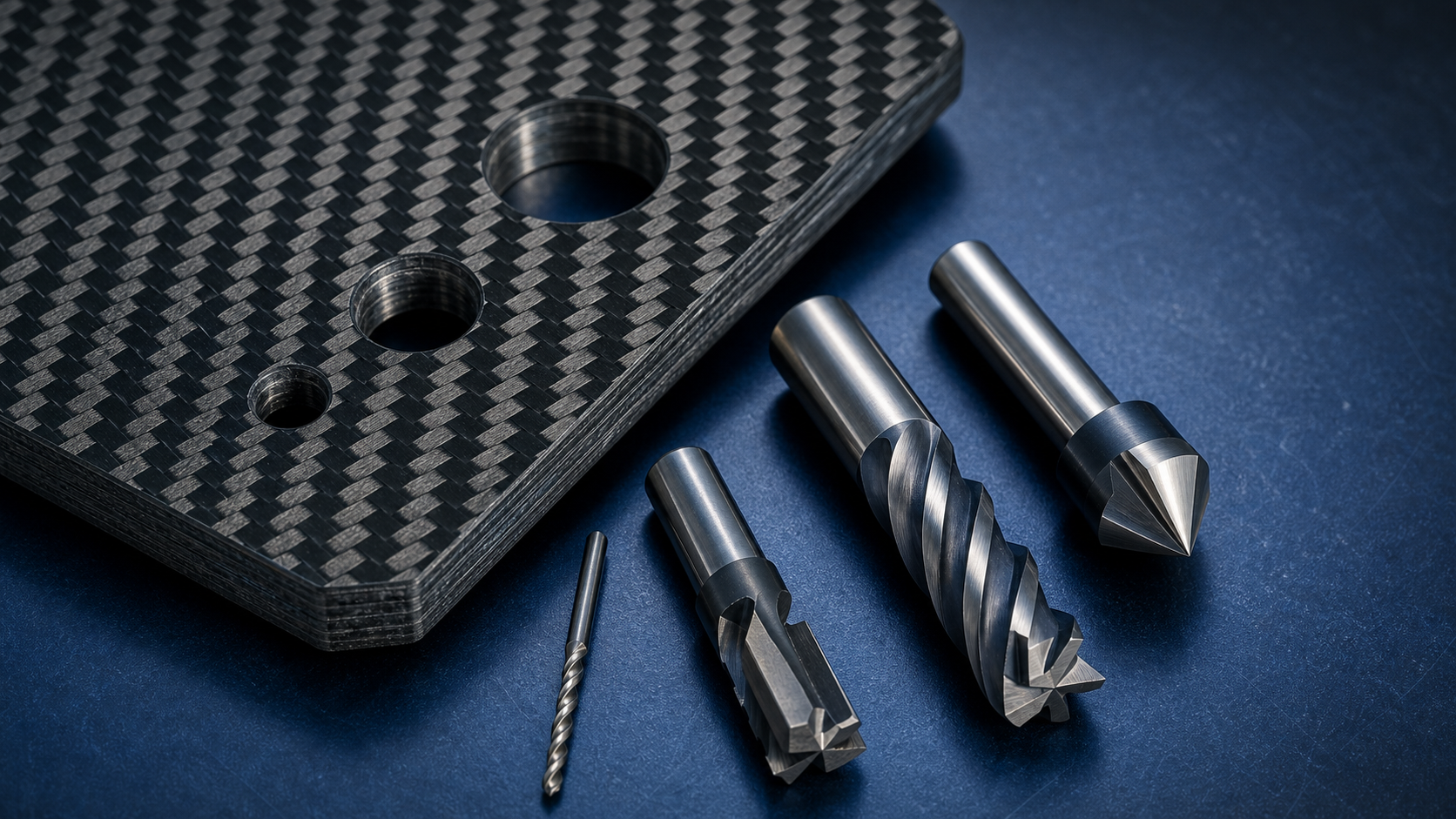
PCD drill selection for composite materials
PCD drills are often selected for repeat composite drilling because PCD has very high wear resistance. This can help reduce tool changes and keep hole quality more stable over longer production runs.
However, PCD drill selection should consider:
- Drill diameter and overall length
- Cutting edge structure
- Point geometry
- Flute design and chip evacuation
- Shank type
- Hole depth and through-hole or blind-hole condition
- Required entry and exit quality
- Whether the tool is used in a stack material
For composite-only drilling, the tool may focus more on delamination control and fiber cutting quality. For composite-aluminum or composite-titanium stacks, the tool may need to balance different cutting behaviors in one operation.
PCD vs carbide for composite machining
Carbide tools are commonly used for many composite applications, especially when the volume is low, the tolerance is not extremely demanding, or the buyer needs a lower starting cost.
PCD tools are usually considered when:
- Carbide tools wear too quickly
- Hole quality changes during production
- Tool change frequency is too high
- Scrap risk is expensive
- Repeat production needs stable performance
- The buyer wants to reduce total machining cost, not only unit tool price
In simple buyer language: carbide may be a practical starting point, while PCD is often a stronger option for abrasive materials, higher volume and more demanding quality targets.
How to compare cost correctly
PCD drills usually cost more per piece than standard carbide drills. But for composite machining, a lower tool price does not always mean a lower production cost.
Buyers should compare:
- Tool price
- Tool life
- Number of good holes per tool
- Hole quality stability
- Tool change time
- Scrap risk
- Machine downtime
- Repeat supply stability
For example, if a cheaper drill creates delamination after a short run, the cost of rejected parts may be higher than the tool saving. For repeat production, cost per good hole is often more useful than tool price alone.
When custom composite tools are needed
Custom PCD or carbide composite tools may be needed when the part shape, stack material, tolerance or operation is not suitable for a standard tool.
Custom tools are often reviewed for:
- Special drill geometry
- Step drills
- Countersink and drilling combination tools
- PCD routers for trimming
- Compression-style cutters
- Tools for composite-metal stack machining
- Special shank or machine interface
- Longer tool life targets in repeat production
For custom tools, a drawing, current tool photo, part photo or sample requirement can make the review much faster.
Quotation checklist
Before requesting a quotation for PCD drills or composite cutting tools, buyers can prepare the following information:
- Product name or tool type
- Tool diameter and length
- Workpiece material and thickness
- Stack material if applicable
- Operation type
- Current tool model or drawing
- Current problem
- Required hole quality or edge quality
- Trial order quantity
- Monthly or annual demand
- Delivery time requirement
- Shipping country and preferred trade terms
Even if all details are not available, sharing the current tool photo and application description is a good starting point.
Final advice for buyers
Composite material machining is application-sensitive. A professional tool recommendation should consider the material structure, machining condition and quality target, not only the tool size.
For buyers sourcing PCD drills, carbide composite tools or custom composite cutting tools, the most useful first step is to describe the real machining problem clearly: material, hole size, current tool life, surface quality issue and expected production quantity.
Sereno Cutting Tools can help review PCD drills, composite material cutting tools and custom tool requirements for buyers who need practical sourcing support from China.